La Herradura
The horseshoe bay that hooks you
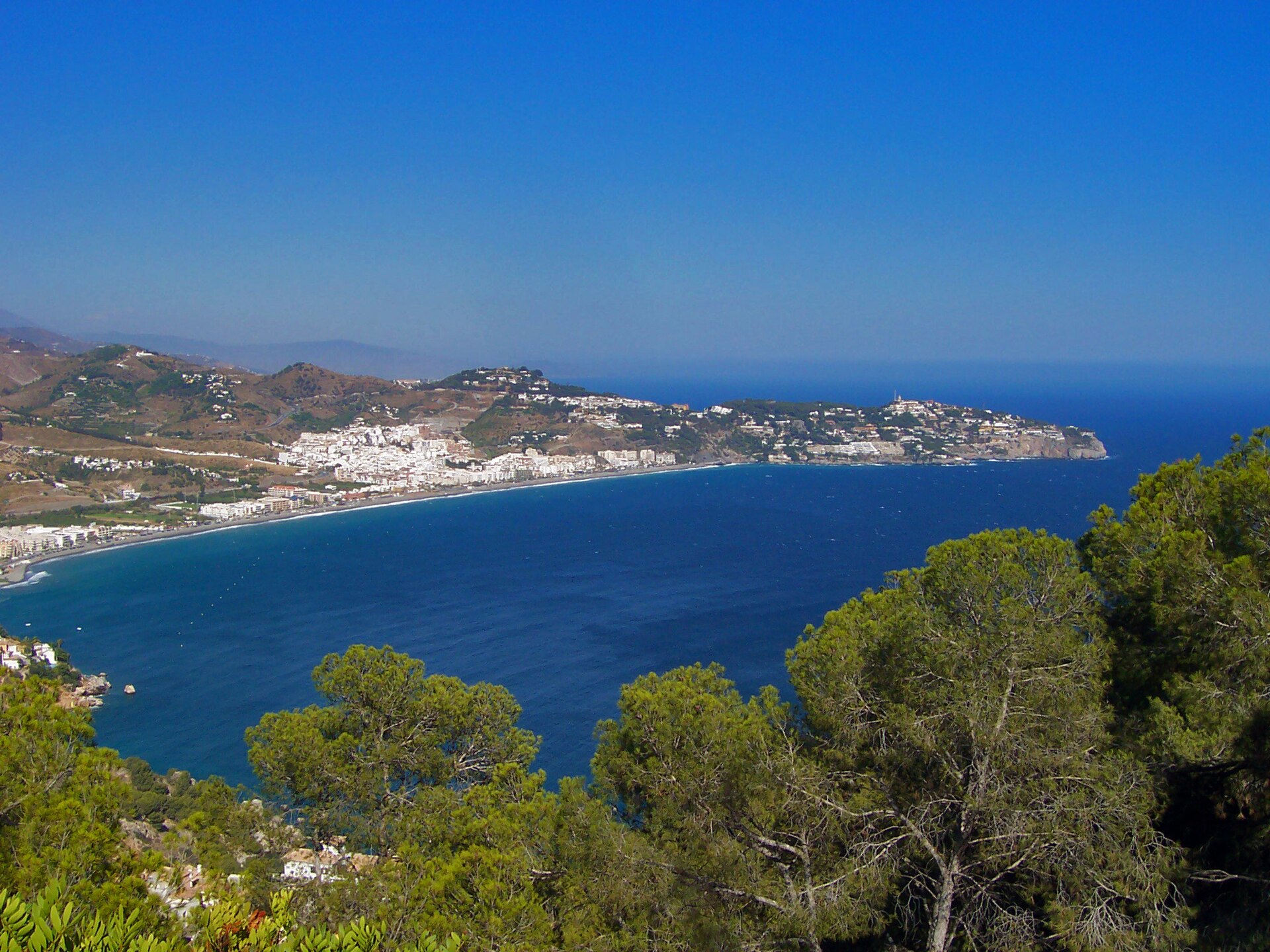
A sheltered horseshoe bay held between two headlands — calm water, one long beach, a laid-back village that lives half in the sea.
The bay
Come over the hill from Almuñécar and the road drops you into a near-perfect curve of blue. La Herradura means "the horseshoe", and for once the name is simply a description: the bay bends round on itself between two high headlands, the water inside it noticeably calmer than anywhere else on this stretch of coast. On a still morning the sea sits flat as poured glass, kayaks tracking slow lines across it, and the whole place has the unhurried air of somewhere that has decided not to compete with its bigger neighbours.
Officially La Herradura is part of the municipality of Almuñécar, a few kilometres to the east. In practice it feels like its own small world — a village wrapped around a bay, with Almuñécar's services close enough to lean on and far enough away not to intrude.
The two headlands
The bay's character comes from its bookends. To the east rises Punta de la Mona, a pine-covered promontory dotted with villas, with the small Marina del Este tucked into its far side — moorings, a handful of waterside restaurants, and clear, protected water that swimmers and snorkellers share with the yachts. It is a pleasant, slightly polished pocket of the coast, and a good lunch destination even if you never set foot on a boat.
To the west stands Cerro Gordo, altogether wilder: dramatic cliffs falling straight into the sea, part of the protected Acantilados de Maro–Cerro Gordo natural area that runs along the Granada–Málaga border. The viewpoint up on the headland is one of the finest on the Costa Tropical — the whole horseshoe laid out below you, and on a clear day the coast unspooling towards Nerja. Between these two arms, the village and its beach sit sheltered from most of what the sea throws at this coast.
The beach and the water
There is essentially one beach: a long, gently curving sweep of dark sand and pebble running the full length of the bay, backed by a seafront paseo made for slow evening walks. It is not postcard-white sand — nothing on this volcanic-toned coast is — but it is spacious, honest and rarely oppressive even in high summer.
The water is the real draw. That natural shelter makes La Herradura the Costa Tropical's capital for diving and snorkelling, with dive centres in the village and rich underwater terrain around both headlands. Kayaks and paddleboards head out towards the Cerro Gordo cliffs; sailing dinghies criss-cross the middle of the bay; swimmers do lengths parallel to the shore before breakfast. If your idea of a good day involves getting wet, this is the best base on the Granada coast, full stop.
Sunsets are a village ritual. The sun drops behind Cerro Gordo, the bay turns copper, and half the seafront pauses to watch.
A quieter character
La Herradura is smaller, slower and a shade more bohemian than Almuñécar. The crowd skews towards divers, sailors and long-stay foreigners who chose the place precisely because not much happens quickly here. There is no big-resort machinery — no strip of high-rise hotels, no thumping nightlife. Some find that blissful; others, after a fortnight, find it limiting. It is worth being honest with yourself about which camp you fall into before committing to more than a holiday.
Food and the front
The seafront and the streets just behind it hold enough bars, restaurants and small shops for comfortable daily life — chiringuitos on the sand, fish and rice dishes, the usual reliable Spanish menú del día alongside a few more international kitchens, reflecting the mixed crowd the bay attracts. The Marina del Este adds its waterside tables for a slightly dressier lunch. What you will not find is endless choice: this is a village's worth of eating, not a city's. When you want variety, Almuñécar is minutes away.
A little history
The calm bay has a dark chapter. In 1562 a Spanish galley fleet, caught by a sudden storm, was wrecked off La Herradura with heavy loss of life — one of the worst maritime disasters of its era on this coast, and an event still remembered locally. It is a sobering counterpoint to the sheltered water you swim in today, and a reminder that the horseshoe's protection has its limits when the weather turns.
Living here
Day to day, the village covers the basics: small supermarkets, pharmacies, banks, schools and health cover as part of Almuñécar municipality. For anything bigger — larger supermarkets, specialist shops, most bureaucracy — you will be making the short hop to Almuñécar, so factor that into your picture of daily life. The subtropical microclimate delivers famously mild winters and hot summers, and winter here is genuinely quiet: some businesses wind down, the seafront empties, and you will need to enjoy your own company or the small resident community's. Property on the hillsides and around Punta de la Mona comes with serious views, and prices to match the setting.
Getting around
La Herradura sits just off the A-7, so escaping is easy: roughly 50 minutes to Málaga airport and about an hour up to Granada. Short local buses connect to Almuñécar, but there is no train anywhere on this coast, and a car makes life considerably easier — especially in winter, and especially if you live up a hill, which in La Herradura you very likely will.
Who it suits
La Herradura will delight divers, snorkellers, paddlers, swimmers and anyone who wants a genuinely calm, scenic base with its feet in the water and a bigger town on call next door. It will frustrate anyone who needs nightlife, urban services on the doorstep, or a busy winter. If the perfect evening is a swim, a beachfront dinner and the sun going down behind Cerro Gordo, you may find the horseshoe very hard to leave.